Low-pressure application
The solution does the cleaning work, so the process does not depend on a concentrated high-pressure jet. This makes it suitable for many surfaces that require a gentler method.
Remove mould, algae and built-up grime with a controlled low-pressure treatment suited to roofs, rendered walls and other delicate exterior surfaces.
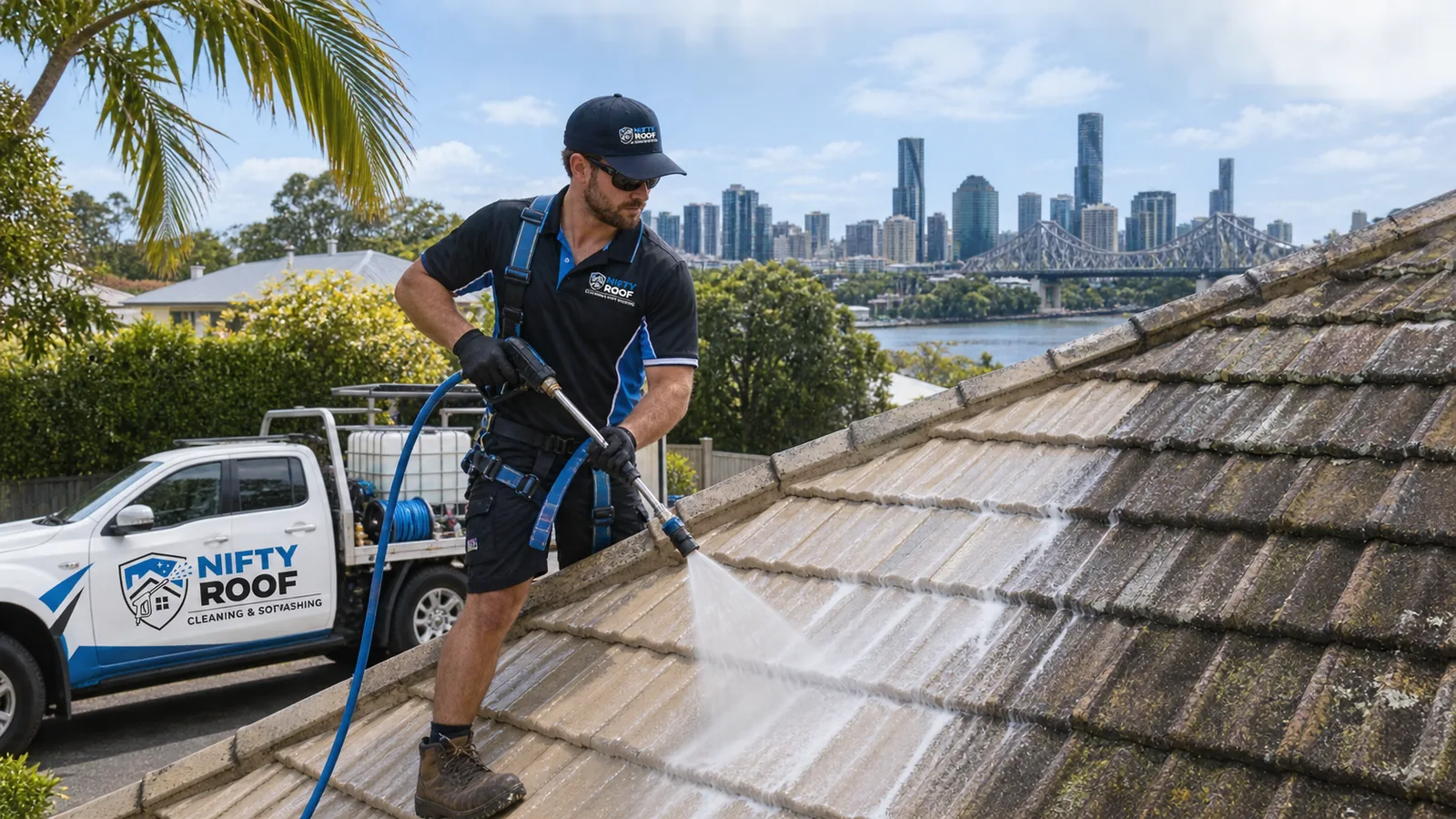
Professional soft washing in Brisbane uses low-pressure application and purpose-selected cleaning agents to treat organic growth without relying on the force of high-pressure water. It is particularly useful on surfaces that may be marked, stripped or damaged by aggressive cleaning, including painted finishes, render, roof tiles, cladding and some sealed masonry.
Brisbane's warm, humid conditions and periods of heavy rain can support mould, algae and lichen growth, especially on shaded or slow-drying surfaces. Overhanging trees, sheltered walls and south-facing areas may stay damp longer. A proper softwash treatment addresses that organic build-up rather than simply blasting away the visible surface layer.
Nifty Roof Cleaning Brisbane approaches the work as a miscellaneous company Brisbane homeowners rely on, with the treatment strength, dwell time and rinse method adjusted to the material and condition in front of us. Our base at 2 Benson St in Toowong also places the team close to established inner-west properties, where sloping blocks, mature vegetation and varied exterior finishes can affect access and preparation.
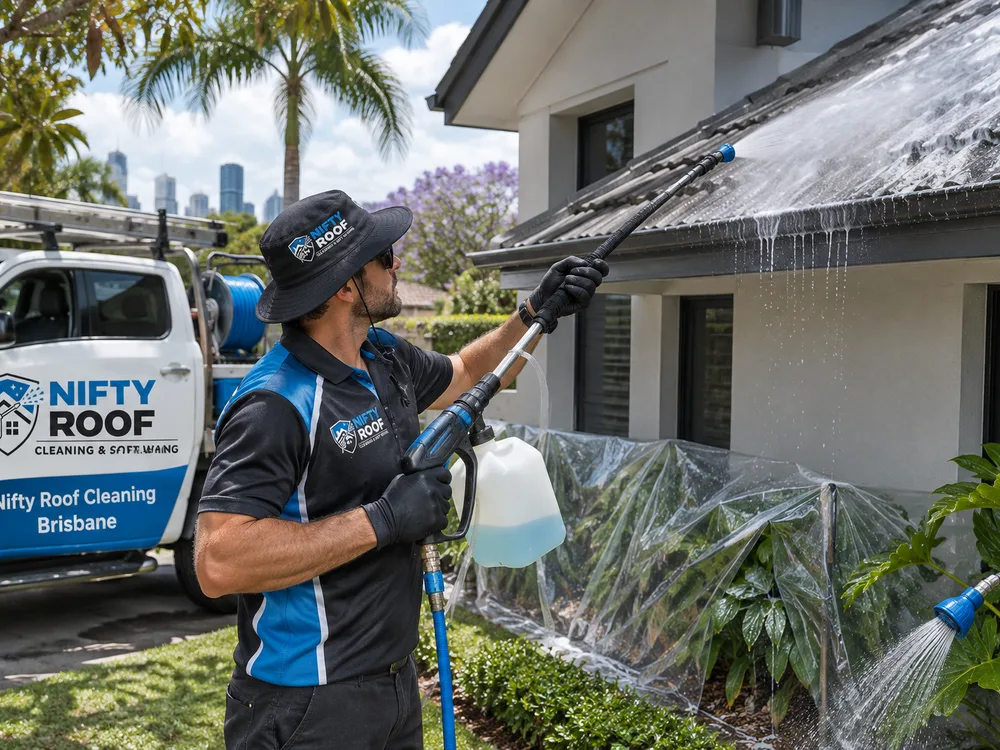
Soft washing may be suitable for tiled and metal roofing, rendered walls, painted exteriors, weatherboards, exterior cladding, eaves, fascias, gutters and selected masonry. Suitability depends on the substrate, coating condition and type of staining. Fragile paint, loose render, oxidised metal and existing leaks need to be identified before treatment.
Organic stains require a different approach from rust, mineral deposits, paint transfer or oil. Mould and algae commonly respond to a softwash solution, while rust and mineral staining may need a dedicated product and may not be removable through standard treatment. We assess the stain first rather than increasing chemical strength without a clear reason.
The service also needs to account for the property around the work area. Outdoor furniture is moved or covered, openings are checked, and runoff routes are considered. Plants and lawns may need pre-wetting, shielding and rinsing. In leafy suburbs such as Toowong and Indooroopilly, vegetation close to walls and rooflines can require extra preparation and controlled application.
The solution does the cleaning work, so the process does not depend on a concentrated high-pressure jet. This makes it suitable for many surfaces that require a gentler method.
Roofing, render, paint and cladding do not all tolerate the same chemistry or dwell time. The mix and application method should reflect the actual material.
Soft washing targets mould, algae, mildew and similar biological staining. Heavy deposits may require more than one controlled application.
Windows, doors, electrical fittings, water tanks, pets and vegetation are considered before application begins. Sensitive areas can then be isolated or protected.
Broad, controlled application helps avoid the stripes and wand marks that can occur when pressure is used inconsistently across a surface.
The proposed surfaces, access requirements, known limitations and expected result should be agreed before treatment starts.
We identify the substrate, staining, fragile coatings and access constraints. Roof pitch, height, solar panels, overhead obstacles and sloping ground can all change the work plan.
Loose items are moved where practical, openings are checked, and sensitive plants or fittings are protected. Water collection points and rainwater tanks are considered before roof treatment.
A low-pressure system distributes the cleaning solution across the target area. The product is given an appropriate dwell time, with drying monitored so the solution can work evenly.
The finish method depends on the surface and treatment. Some areas are rinsed under controlled pressure, while certain roof growth may continue to release gradually after treatment.
We review coverage, rinse surrounding areas as needed and identify any permanent staining, coating failure or repairs that cleaning has exposed.
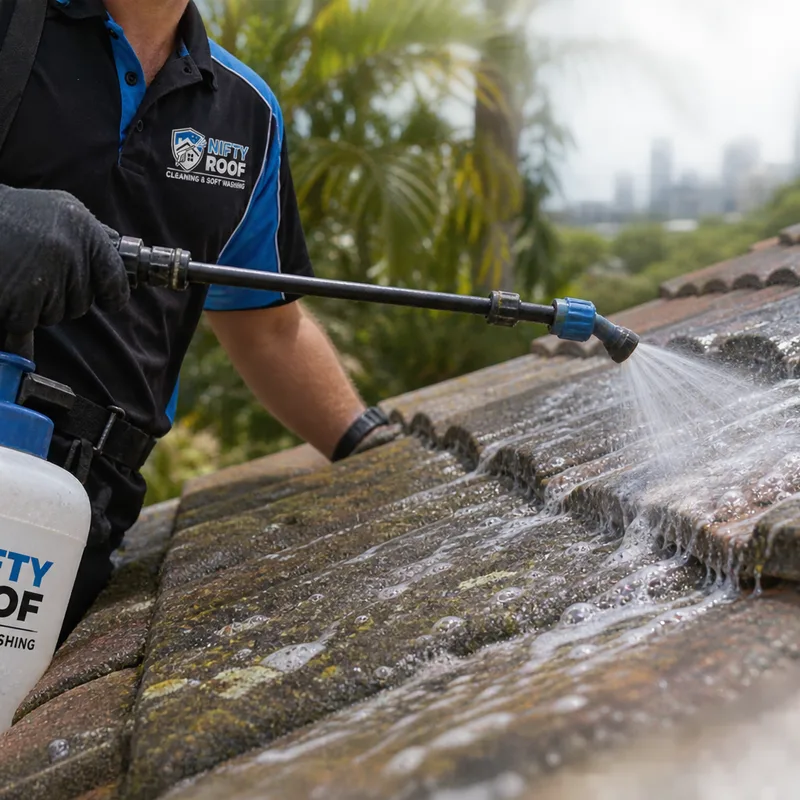
Roof cleaning requires more than swapping a pressure nozzle for a chemical applicator. Tile type, roof pitch, pointing condition, flashings, penetrations and drainage paths all affect how the job should be completed. Concrete and terracotta tiles may have aged coatings or surface wear that becomes clearer once dirt and growth are removed. Metal roofing can also have oxidised or failing paint that needs careful assessment.
A roof is not automatically safe to walk on. Brittle tiles, steep pitches and wet growth can make access hazardous, while careless foot placement can crack tiles. Where roof access is appropriate, the method should limit unnecessary traffic and avoid forcing water under laps, ridge capping or flashings.
Customers should also expect realistic advice about the final appearance. Soft washing can remove or kill organic growth, but it cannot reverse faded paint, tile erosion, corrosion or permanent discolouration. In suburbs such as Paddington, where many homes have steep rooflines and limited side access, setup and safe reach can be as important as the treatment itself.
Soft washing in Brisbane typically costs about $300 to $700 for a smaller exterior treatment, while larger homes, extensive wall cleaning or complex roof work may range from $700 to $1,500 or more. These are general estimates rather than fixed prices.
Final cost depends on surface area, building height, roof pitch, access, stain severity, material condition, plant protection and the number of treatment applications required. Solar panels, restricted side access and steep blocks may add setup time. The exact cost is confirmed after the surfaces and access requirements have been assessed.
Soft washing is a strong choice when organic growth is the main problem and the surface would benefit from lower mechanical force. It is often selected for painted walls, render, cladding, eaves and roofing. A small test area may be appropriate when the coating history is unknown or the surface shows signs of age.
It is not a repair method. Loose paint, cracked render, broken tiles, failed sealants and active leaks should be addressed separately. Cleaning may reveal a colour difference between sound and weathered coatings, and dead lichen can take time to release from a porous roof surface. Setting that expectation before work avoids confusion once the property dries.
Site conditions matter too. Ashgrove's leafy residential streets can mean heavier debris around gutters and shaded roof areas, while riverside humidity in low-lying parts of Brisbane can slow drying on sheltered surfaces. Each property still needs its own inspection because orientation, airflow, tree cover and drainage vary even within the same suburb.
Nifty Roof Cleaning Brisbane provides a written scope based on the surfaces to be treated and the access involved. That scope should identify exclusions, preparation requirements and any areas where staining or material damage may remain visible.
Arrange an assessment to confirm which surfaces are suitable for soft washing, what preparation is required and what result can reasonably be expected.
Call for a Free EstimateA straightforward house exterior may take several hours, while larger properties or roof treatments can require most of a working day. Height, access, preparation, plant protection and the number of applications affect timing. Steep blocks common in parts of Brisbane's inner west can add setup time even when the treatment area is modest.
Soft washing can be suitable for sound painted walls and render when the chemistry, pressure and dwell time are matched to the coating. Flaking paint, chalking, cracks or loose render need to be identified first. A test patch may be used when the coating condition or previous paint system is uncertain.
Soft washing can treat many types of mould, algae and lichen, but thick lichen may not disappear immediately. After treatment, dead growth on porous tiles can weather away gradually. Permanent staining, faded coatings and surface erosion can remain visible because cleaning does not restore damaged roofing material.
Yes, sensitive vegetation near the treatment area should be identified and protected as part of the work plan. Common controls include pre-wetting, physical covers where appropriate, controlled application and thorough rinsing. Properties with dense planting close to walls or eaves may require extra preparation.
A rainwater collection system needs to be identified before roof treatment so runoff can be managed appropriately. Downpipes may need to be diverted or isolated according to the property's setup, and the tank should not receive cleaning runoff. Tell the team about tanks, pumps and connected irrigation during the assessment.
Painting should wait until the surface is fully rinsed where required, dry and accepted as ready under the coating manufacturer's instructions. Brisbane humidity, shade and porous materials can extend drying time. Soft washing also exposes loose paint or failed coatings that may need scraping, repair or priming before painting.
No, soft washing relies on low-pressure application and cleaning chemistry, while pressure cleaning relies more heavily on water force. The correct method depends on the material and contaminant. Durable concrete may tolerate controlled pressure, but painted finishes, render and many roof surfaces often need a gentler approach.
Tell us which exterior surfaces need attention and any access, garden or rainwater tank concerns. We will assess the condition and outline a suitable treatment plan.