Painted weatherboards
Older coatings, joints and flaking areas are checked before washing. Lower pressure helps limit paint damage and water entry behind boards.
Remove built-up grime, mould and surface staining with a wash method selected for your home's exterior materials.
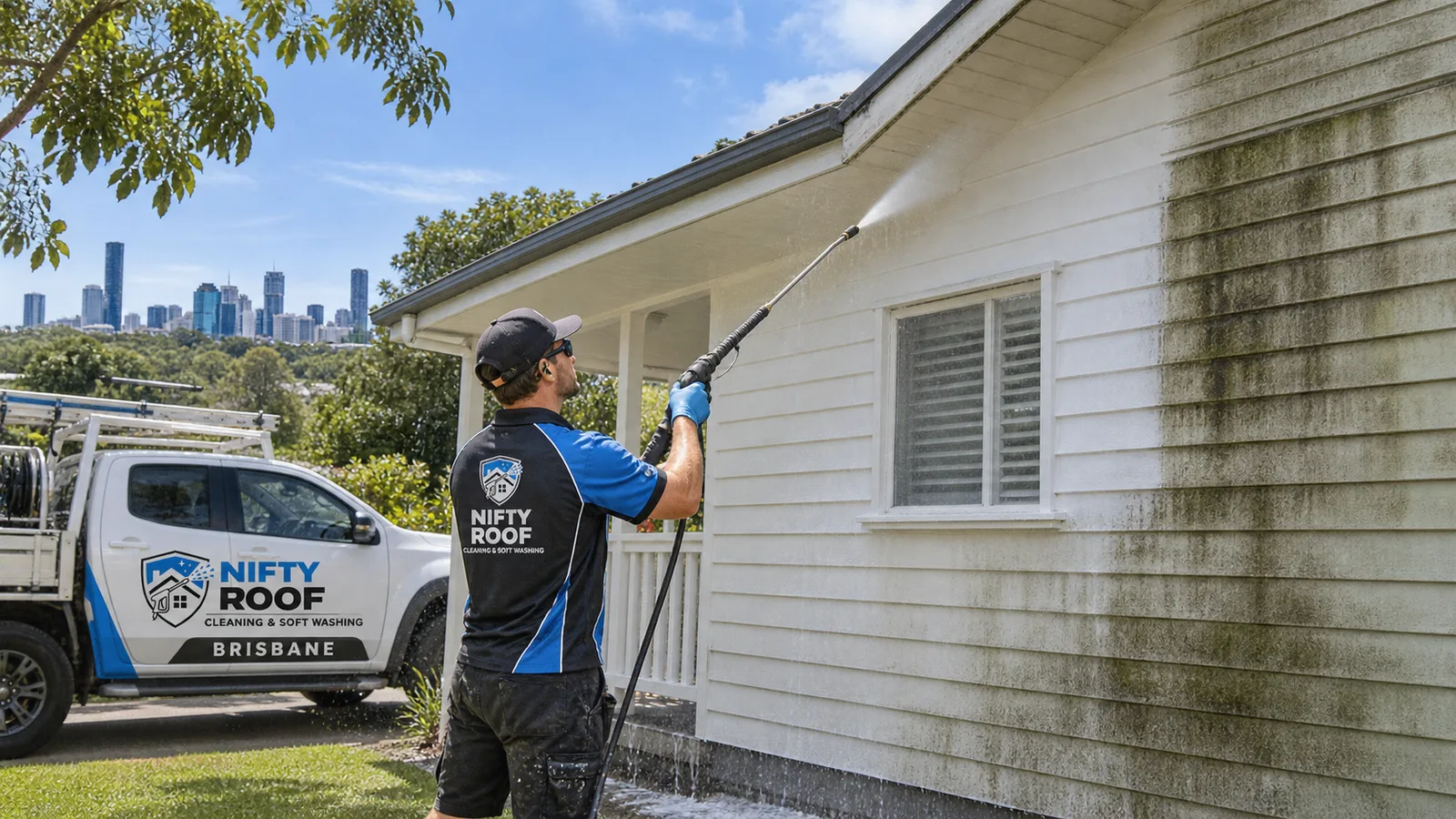
Professional house washing in Brisbane removes the dirt, organic growth, cobwebs and traffic film that gradually dull exterior walls. The aim is an even, brighter finish without using more pressure than the surface can safely handle.
Nifty Roof Cleaning Brisbane assesses the cladding, paint condition, access and surrounding areas before work begins. Our Brisbane's trusted miscellaneous team matches the cleaning method to the material rather than treating every wall the same way. Painted weatherboards, rendered walls, brickwork, fibre-cement cladding, eaves, fascia boards and exterior trim can all respond differently to water pressure and cleaning agents.
Brisbane's warm, humid conditions can support mould, mildew and algae, especially on shaded walls and areas with limited airflow. Storm-driven dust and grime also collect under eaves and around window surrounds. A planned exterior wash addresses that build-up while protecting plants, fittings and adjacent surfaces.
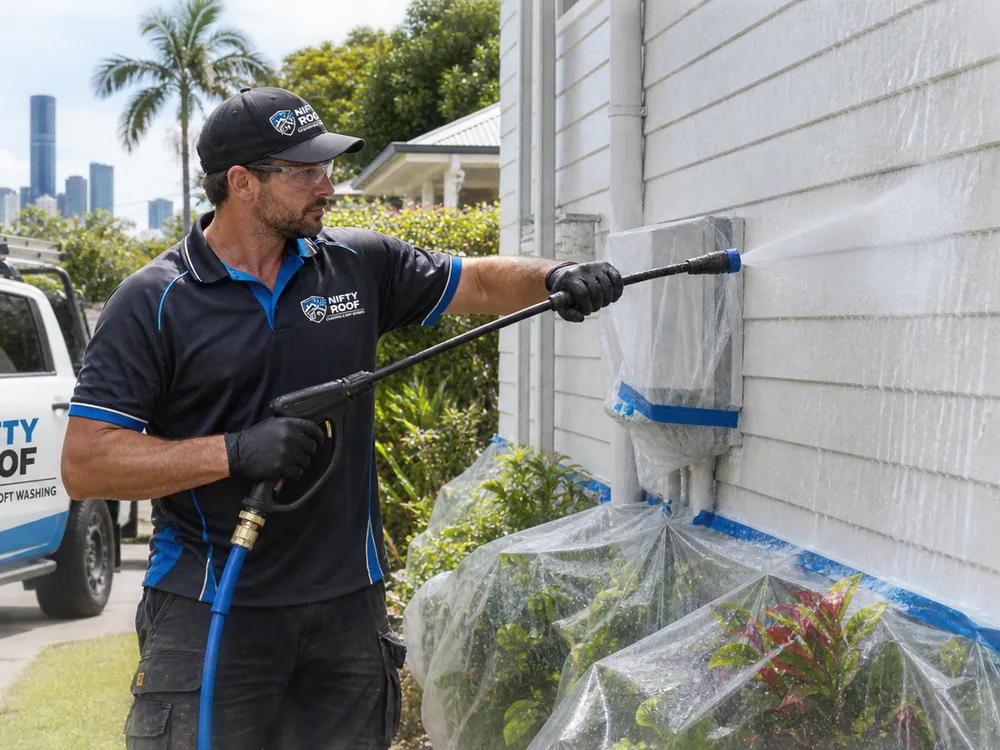
The scope is set around the building and its condition. A typical house wash may include accessible exterior walls, eaves, fascia boards, soffits, window surrounds, downpipes and external trim. Cobwebs and loose surface debris are removed as part of the preparation, followed by an appropriate cleaning treatment and controlled rinse.
Soft washing is often selected for painted or delicate surfaces. It relies on a suitable cleaning solution, dwell time and a low-pressure rinse to loosen organic staining. Controlled pressure cleaning may suit sound masonry or other durable surfaces, but high pressure is not the default for every wall. Close-range pressure can damage ageing paint, force water behind cladding or mark softer materials.
Before the wash starts, vulnerable electrical fittings, open windows, loose paint and drainage paths need attention. Plants can be pre-wet and rinsed after treatment, while runoff should be managed rather than allowed to collect around garden beds or entrances.
Older coatings, joints and flaking areas are checked before washing. Lower pressure helps limit paint damage and water entry behind boards.
Render can hold dirt and organic staining in its texture. Treatment strength, dwell time and rinse pressure are adjusted to the coating's condition.
Sound masonry generally tolerates controlled pressure better than painted cladding, although mortar joints and existing damage still require care.
The finish and paint system guide the wash method. Directing high-pressure water into sheet joints or laps is avoided.
Cobwebs, dust and spotting often gather on soffits, fascia boards and window surrounds. These areas benefit from a gentler rinse and careful access.
Building height, setbacks, sloping ground and restricted side access affect equipment selection, work time and the final scope.
We identify wall materials, unstable paint, cracks, open joints, electrical fittings, access limits and heavily affected areas before choosing a method.
Windows and doors should be closed, while outdoor furniture and fragile items are moved clear. Nearby plants and sensitive fixtures receive suitable protection.
The selected solution is applied evenly and given time to work on grime and organic growth. Concentration and dwell time depend on the surface and level of build-up.
Walls, eaves and trim are rinsed methodically. The operator controls spray angle and pressure around vents, joints, seals and painted finishes.
Treated surfaces and surrounding areas are checked, plants receive a final rinse where required, and any pre-existing defects remain clearly identified.

House design and site access vary across Brisbane. Toowong has many homes on sloping blocks, so stable equipment positioning and safe access around retaining walls can affect the plan. Paddington's character housing often includes painted timber, verandahs and detailed trim that call for lower pressure and careful rinsing. In New Farm, closely spaced properties can require tighter control of spray and runoff near neighbouring walls and shared boundaries.
Queensland's strong sun can also leave painted elevations in different condition on the same home. A shaded wall may carry organic growth while a more exposed wall shows chalking or ageing paint. Testing a small area helps identify how the finish responds before wider treatment begins.
External house washing in Brisbane is surface cleaning, not a repair for failed coatings, cracked render, leaking joints or deteriorated seals. Those defects should be identified before water is applied. Heavy staining may improve substantially without disappearing completely when it has penetrated an old or porous finish.
A Brisbane house wash typically costs about $300 to $700 for a standard single-storey home, while larger, two-storey or access-restricted properties may range from about $500 to $1,200 or more. These are general estimates rather than fixed prices.
The final price depends on exterior area, building height, cladding type, staining, preparation needs and access around the home. Verandahs, detailed trim and heavy organic growth can add time. The exact cost is confirmed after the property and requested scope have been assessed.
Describe your home's exterior, access and main areas of concern to receive a clear scope based on the surfaces that need washing.
Call for a Free Estimate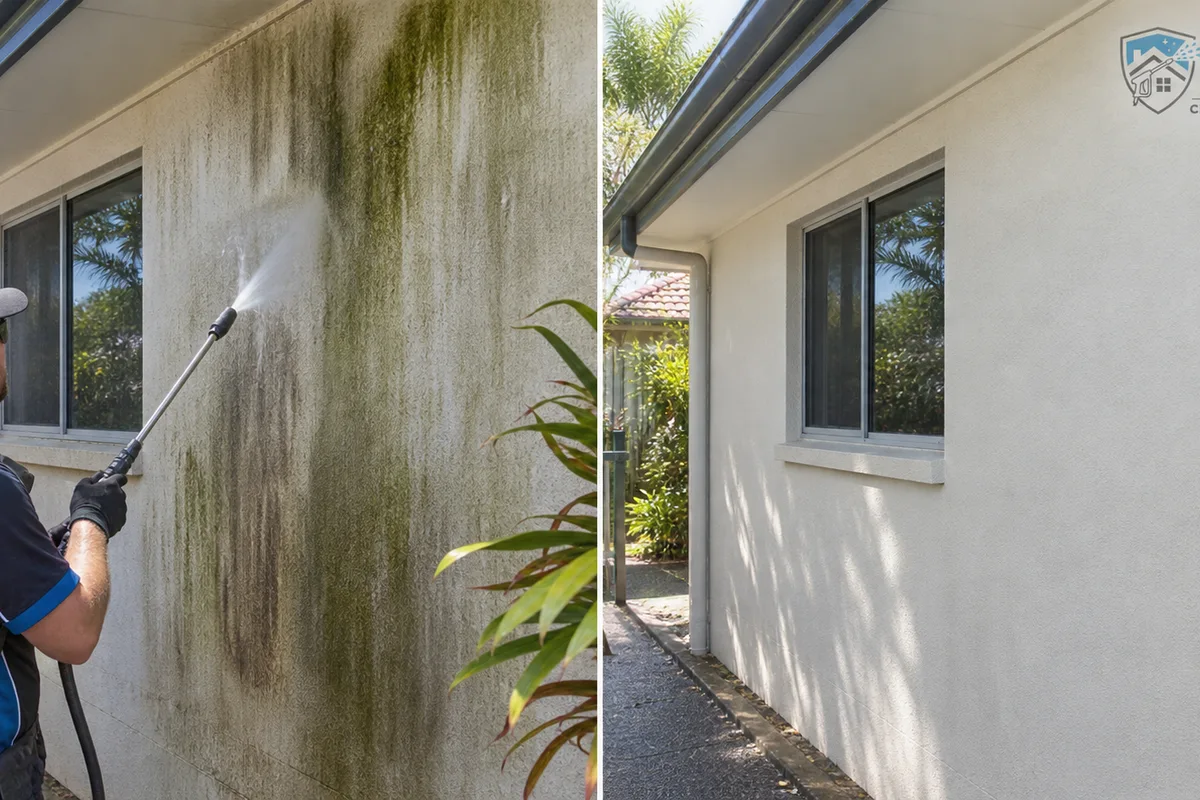
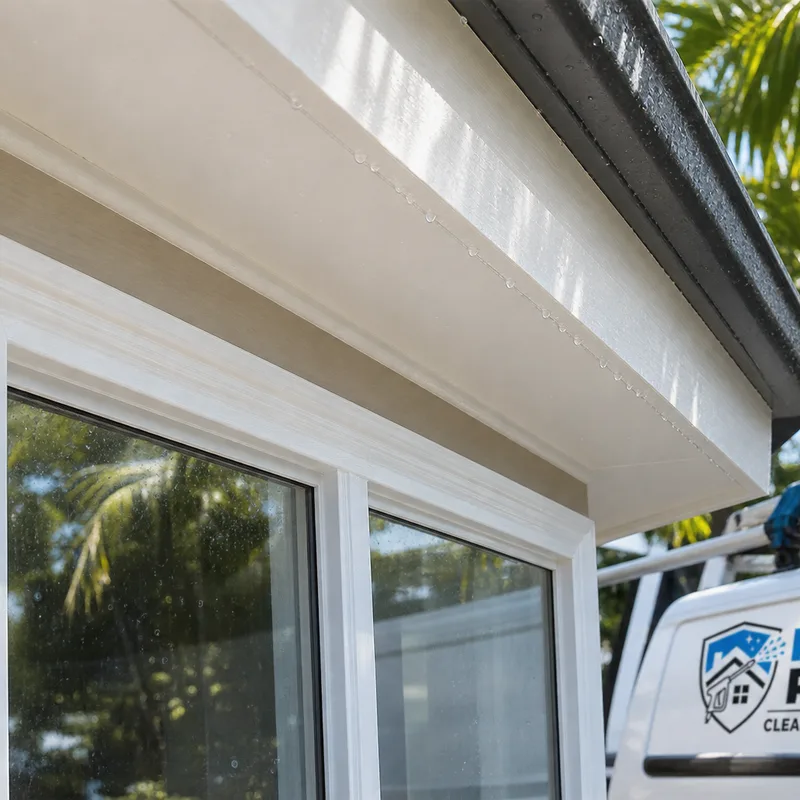
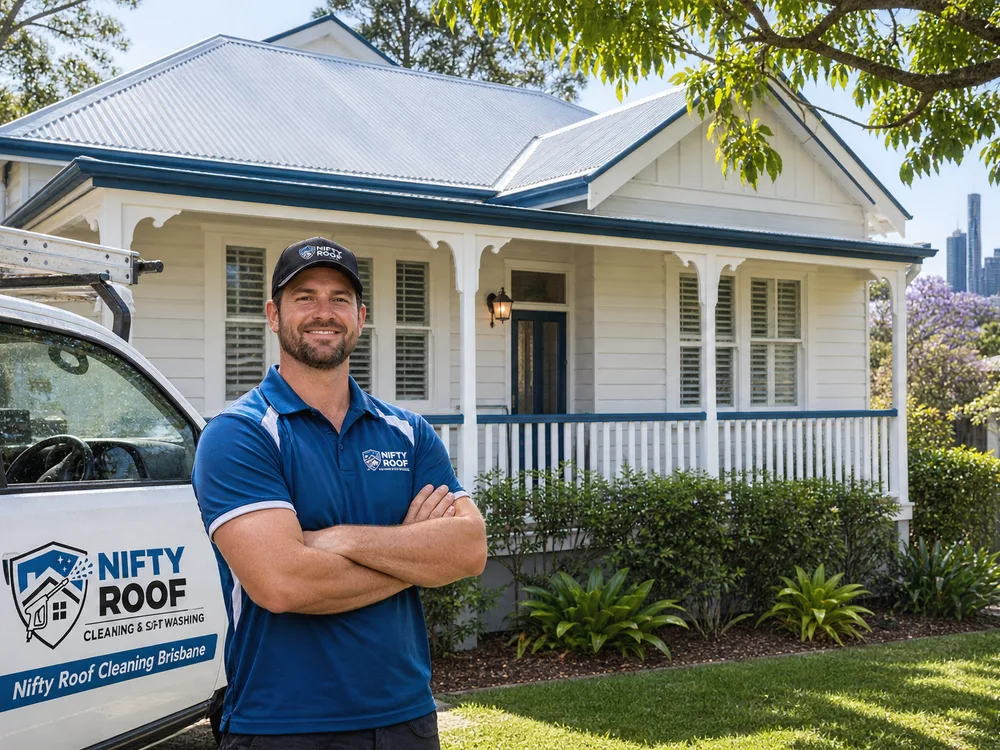
Soft washing suits many painted and delicate exteriors, but the surface condition must be assessed first. Painted weatherboards, render and fibre-cement cladding often benefit from cleaning solution and low-pressure rinsing. Loose paint, open joints, damaged seals or porous finishes may require exclusions, reduced treatment or repair before work starts.
A standard single-storey wash often takes several hours, while larger or two-storey homes can require most of a day. Brisbane properties on sloping blocks, homes with narrow side access, detailed verandahs and heavy organic build-up usually take longer because preparation and controlled access add to the work.
You may not need to remain home if access, water availability and the agreed scope have been arranged in advance. Windows and doors must be shut, pets kept inside, and vehicles, furniture and fragile items moved away from the work area before washing begins.
House washing can remove or greatly reduce surface mould, mildew, algae and general grime, but permanent discolouration may remain. Deep staining in porous render, rust marks, oxidised paint and marks beneath failed coatings are different problems and may need specialist treatment, repair or repainting.
Older timber homes can often be washed safely when the paint, boards, joints and decorative details are inspected first. In suburbs such as Paddington, painted weatherboards and detailed verandah trim generally call for lower pressure, careful spray direction and extra attention around windows and gaps.
Close all windows and doors, clear outdoor furniture, remove washing, secure pets and identify any known leaks or electrical concerns. Ensure there is practical access around the walls. Delicate plants, loose decorations and items stored beside the home should be moved or discussed before work begins.
There is no fixed interval because shade, airflow, surrounding vegetation, traffic exposure and paint condition vary between properties. Brisbane's humid conditions can cause shaded elevations to need attention sooner than sunny, open walls. Arrange cleaning when organic growth and grime become established rather than relying on a rigid schedule.
Tell Nifty Roof Cleaning Brisbane about the exterior material, property height, access and visible staining. You will receive a scope based on the condition of your home rather than a one-method-fits-all approach.