Concrete tile roofs
Sound concrete tiles may respond well to controlled pressure cleaning or an appropriate treatment. Weathered coatings and weak pointing must be identified first.
Careful cleaning for tiled and metal roofs, with the method matched to the roof material, condition and access.
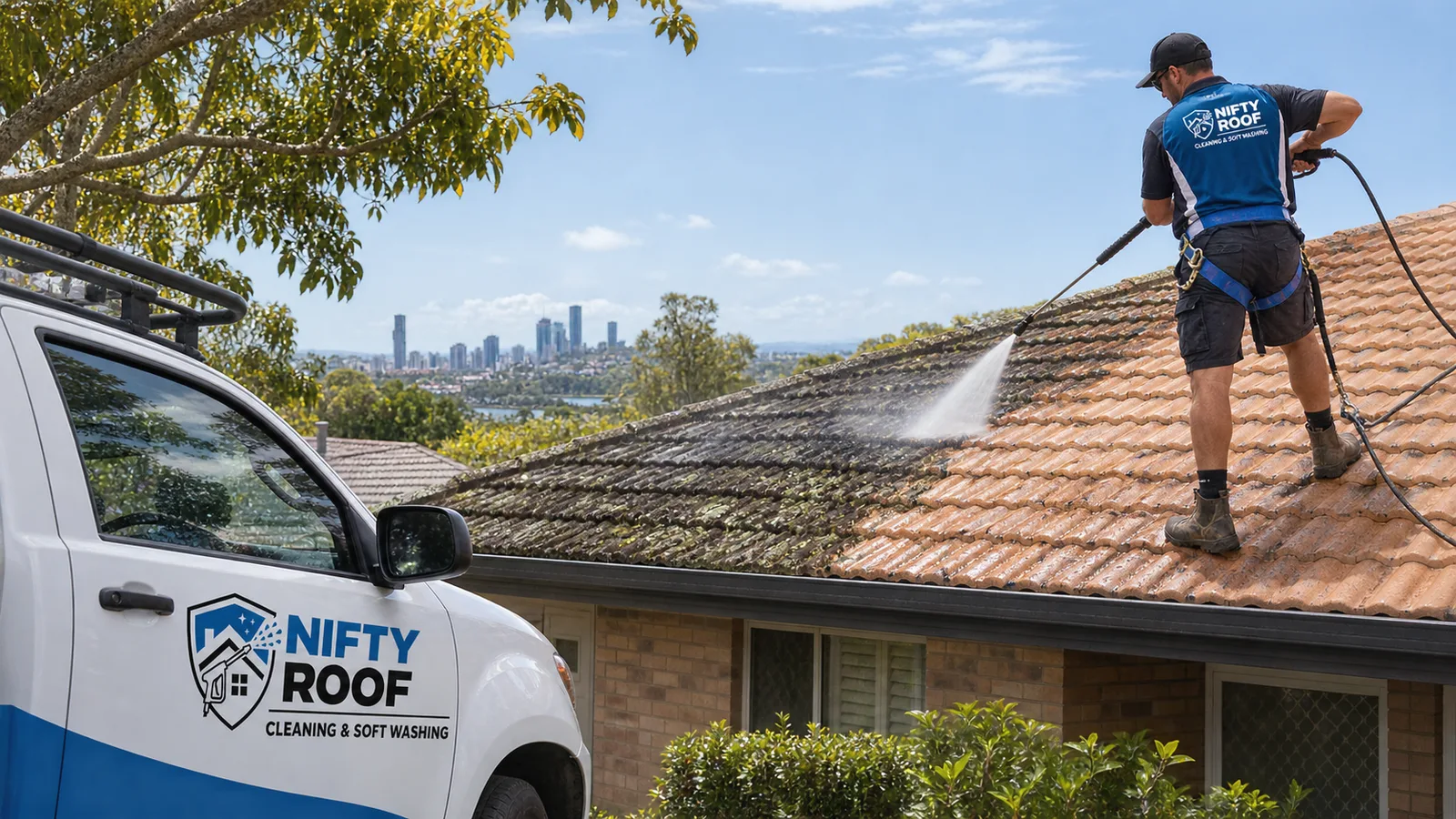
Professional roof cleaning North Brisbane property owners can rely on starts with an inspection. The roof material, coating condition, pitch, access and type of buildup all affect the safest approach. Concrete tiles, terracotta tiles and coated metal roofing should not automatically receive the same treatment.
Nifty Roof Cleaning Brisbane looks at the roof before settling on a method. With practical care, Brisbane's local miscellaneous service carries out the work while considering nearby properties, gardens, gutters, solar panels and water runoff. Our business is based at 2 Benson St, Toowong, giving the team a local Brisbane base for work across the northside.
Brisbane's warm, humid conditions can support mould, algae and lichen growth, particularly where roofs stay shaded by trees or receive limited sun. Summer storms can also leave leaf litter in valleys and around roof penetrations. Cleaning removes surface contamination and gives the roof a more even appearance, but it does not repair cracked tiles, failed pointing, corrosion or an ageing coating. If an inspection reveals a defect, it should be assessed separately rather than hidden under a cleaning treatment.
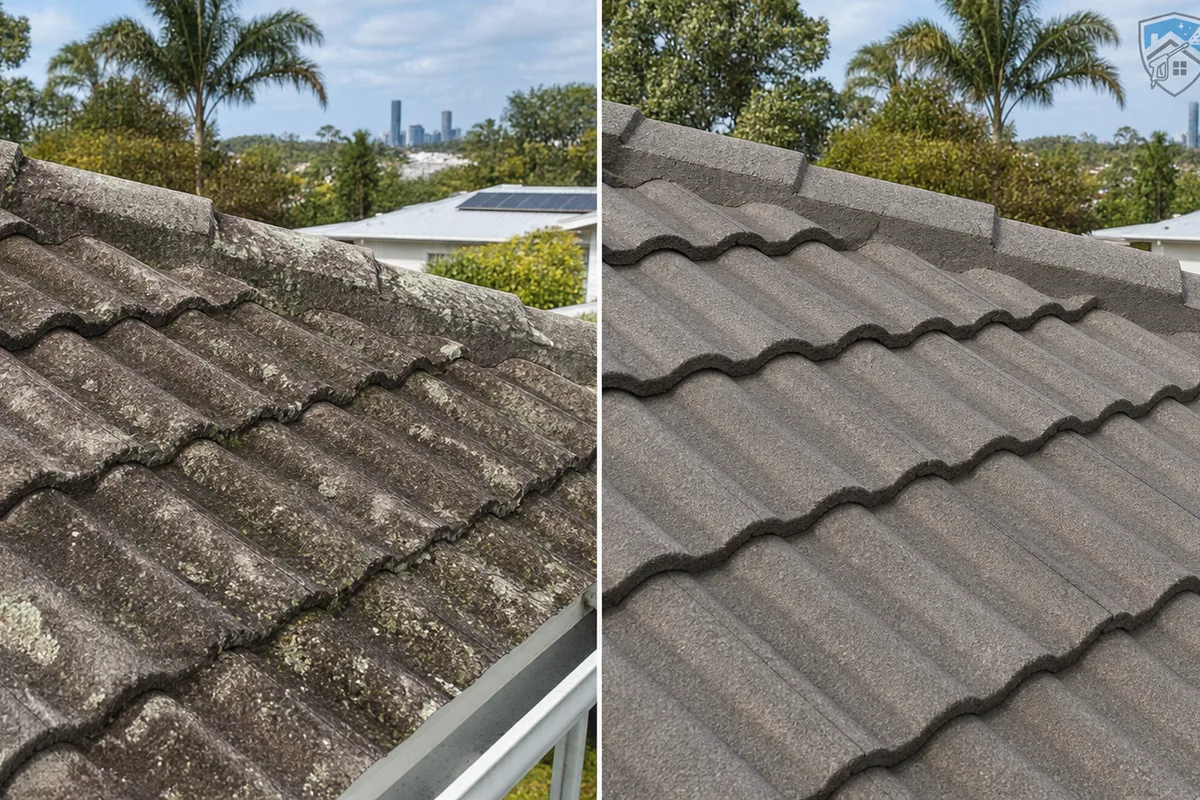
Roof surfaces collect airborne dirt, organic growth, leaf residue and staining. Black or green patches are often associated with algae or mould, while lichen can attach firmly to tile surfaces. The appropriate treatment depends on how strongly the growth is bonded and whether the roofing material or coating is fragile.
A controlled pressure clean may suit sound concrete tiles or certain durable surfaces when the operator uses suitable pressure, distance and nozzle selection. Chemical soft washing uses a cleaning solution and lower water pressure to treat organic growth. It can be preferable where high pressure may damage a coating or force water beneath laps. Terracotta tiles, older pointing and weathered coatings need particular care.
The work should also account for gutters, downpipes, flashings, valleys, skylights and solar panels. These areas affect access and runoff management. A competent cleaner protects sensitive surfaces and avoids directing water into roof cavities through ridge lines, vents or tile overlaps.
Sound concrete tiles may respond well to controlled pressure cleaning or an appropriate treatment. Weathered coatings and weak pointing must be identified first.
Terracotta can become brittle with age and may carry firmly attached lichen. Access, tile condition and the proposed cleaning pressure need careful review.
Coated metal requires a method that respects the existing finish. Corrosion, loose fasteners and damaged paint are maintenance issues rather than stains.
Organic growth needs more than a quick rinse. The selected treatment should address the contamination while remaining suitable for the roof material.
Homes near mature trees can collect leaves and remain damp for longer. Debris around valleys, gutters and penetrations must be considered during cleaning.
Panels change movement paths and create narrow areas where debris can gather. Their frames, wiring and mounting points should not be used as footholds.
We start with the roof type, visible staining, building height, access points and obstacles such as solar panels. Photos may help with an initial discussion, but they do not replace an on-site assessment where one is needed.
The inspection checks for fragile tiles, loose or deteriorated ridge pointing, damaged flashings, corrosion, roof penetrations and unsafe access. Existing defects are identified before water or treatment is applied.
The cleaning approach is matched to the material and contamination. The scope should state which roof areas are included, how runoff will be managed and whether gutters or other items fall outside the quoted work.
Sensitive plants, nearby walls and outdoor items may require protection or rinsing. Access and fall risks are addressed before work starts, and windows and doors should remain closed during cleaning.
The technician works methodically to avoid forcing water beneath tiles, laps, flashings or vents. Stubborn organic growth may need treatment rather than excessive pressure.
The roof and surrounding work area are reviewed after cleaning. Any visible maintenance concerns found during the job can then be reported for separate assessment.
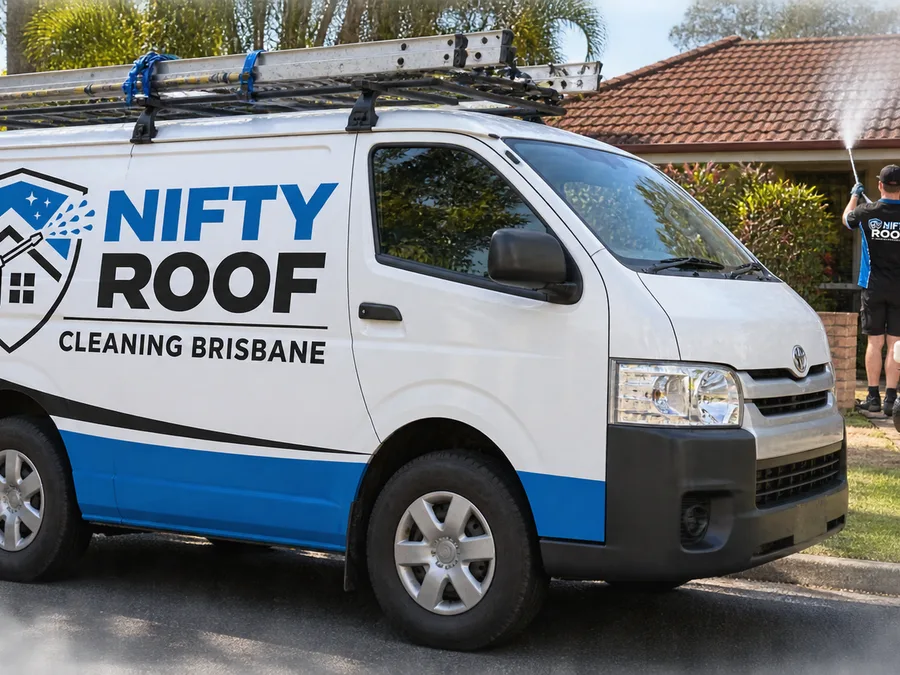
North Brisbane includes leafy residential areas, established housing and newer developments, so roof access and materials vary considerably. In The Gap, trees and the area's hilly setting can create shade and more difficult access on some blocks. Ashgrove has many established homes where older tiles and roof coatings need to be checked before cleaning begins.
Chermside includes detached houses as well as denser buildings, making safe access and overspray control important. Cars, neighbouring walls and shared boundaries may sit close to the work area. Around Sandgate and Brighton, coastal exposure makes existing coating wear and metal corrosion worth identifying before cleaning. Cleaning can remove grime, but it cannot restore missing protective coating or repair rust.
Stormwater handling matters throughout Brisbane. Wash water and debris should be controlled rather than allowed to spread across neighbouring property or enter unsuitable areas. Gutters and downpipes also need to be considered before the roof is rinsed, especially when they already contain leaves or sediment.
Roof cleaning in North Brisbane typically costs about $400 to $1,200 for a standard detached home, while large, steep, multi-level or heavily affected roofs may cost more. Smaller, straightforward roofs generally sit toward the lower end.
Final price depends on roof area, pitch, height, material, contamination, solar panels, fragile sections and safe access. Runoff protection and extra preparation can also affect labour. Your exact cost is confirmed after the property and required cleaning method have been assessed.
A roof cleaning quote should describe the roof area being cleaned, the proposed method and any exclusions. It should also account for height, pitch, access, solar arrays and nearby surfaces that require protection. Ask how fragile materials are handled and what happens if damaged tiles or deteriorated pointing are found.
Avoid choosing solely on the lowest figure. Aggressive pressure can strip a weathered coating, damage tiles or drive water through vulnerable joints. At the other extreme, a light rinse may improve loose dirt without treating established organic growth. The right method balances effective cleaning with the condition of the roof.
Roof cleaning is also different from roof restoration. Cleaning addresses dirt, staining and organic buildup. Repairs, repointing, sealing and recoating are separate scopes that require their own assessment. A written scope makes that distinction clear before work begins.
Arrange an assessment to receive a roof-specific cleaning plan based on the material, condition, access and type of buildup.
Call for a Free EstimateNo, pressure cleaning is not suitable for every roof or every part of a roof. Sound concrete tiles may tolerate controlled pressure, while brittle terracotta, weathered coatings, loose pointing and some painted metal surfaces can require a gentler method. Brisbane's humid conditions can produce stubborn organic growth, but increasing pressure is not always the safe answer.
A standard detached home can often be cleaned within a day, although size, pitch, access and contamination can extend the work. Solar panels, multiple roof levels and limited side access add setup time. A North Brisbane property on a steep or tree-lined block may also need more preparation and runoff control.
Cleaning can remove or treat many black stains, mould, algae and lichen, but the result depends on the roof surface and how deeply growth is attached. Lichen may need chemical treatment and time to release rather than forceful removal. Permanent coating loss, rust marks or material discolouration can remain after surface contamination is gone.
You may not need to remain home if safe access, water availability and the work scope have been arranged in advance. Gates need to be accessible, pets should be kept inside, and windows and doors should stay closed. Vehicles and outdoor furniture may need to be moved away from runoff or overspray areas.
A roof with solar panels can often be cleaned, provided safe movement paths and panel clearances are available. Panels, frames, cabling and mounts must be treated as obstacles rather than footholds. Tight spaces beneath an array may limit access, and washing the roof does not automatically include cleaning the panel glass.
There is no fixed cleaning interval because shade, tree cover, roof pitch, material and previous coating condition vary by property. Inspect the roof when staining or organic growth becomes visible, particularly after extended humid weather or heavy leaf fall. Repeated cleaning within a short period may point to persistent shade, drainage or maintenance issues that need separate attention.
Roof cleaning does not automatically include gutter cleaning or repairs unless those items are written into the scope. Gutters may need debris cleared to manage wash water, but cracked tiles, failed pointing, corrosion and damaged flashings require separate repair work. Confirm inclusions before the job begins.
Tell Nifty Roof Cleaning Brisbane about the roof material, visible buildup and property access. We will help define a suitable method and a clear scope before work starts.