Surface and Access Assessment
We review roof material, pitch, visible defects, safe access points and nearby property before equipment is set up.
A roof-specific soft cleaning plan that treats organic growth, protects sensitive surfaces and leaves the exterior looking cared for.
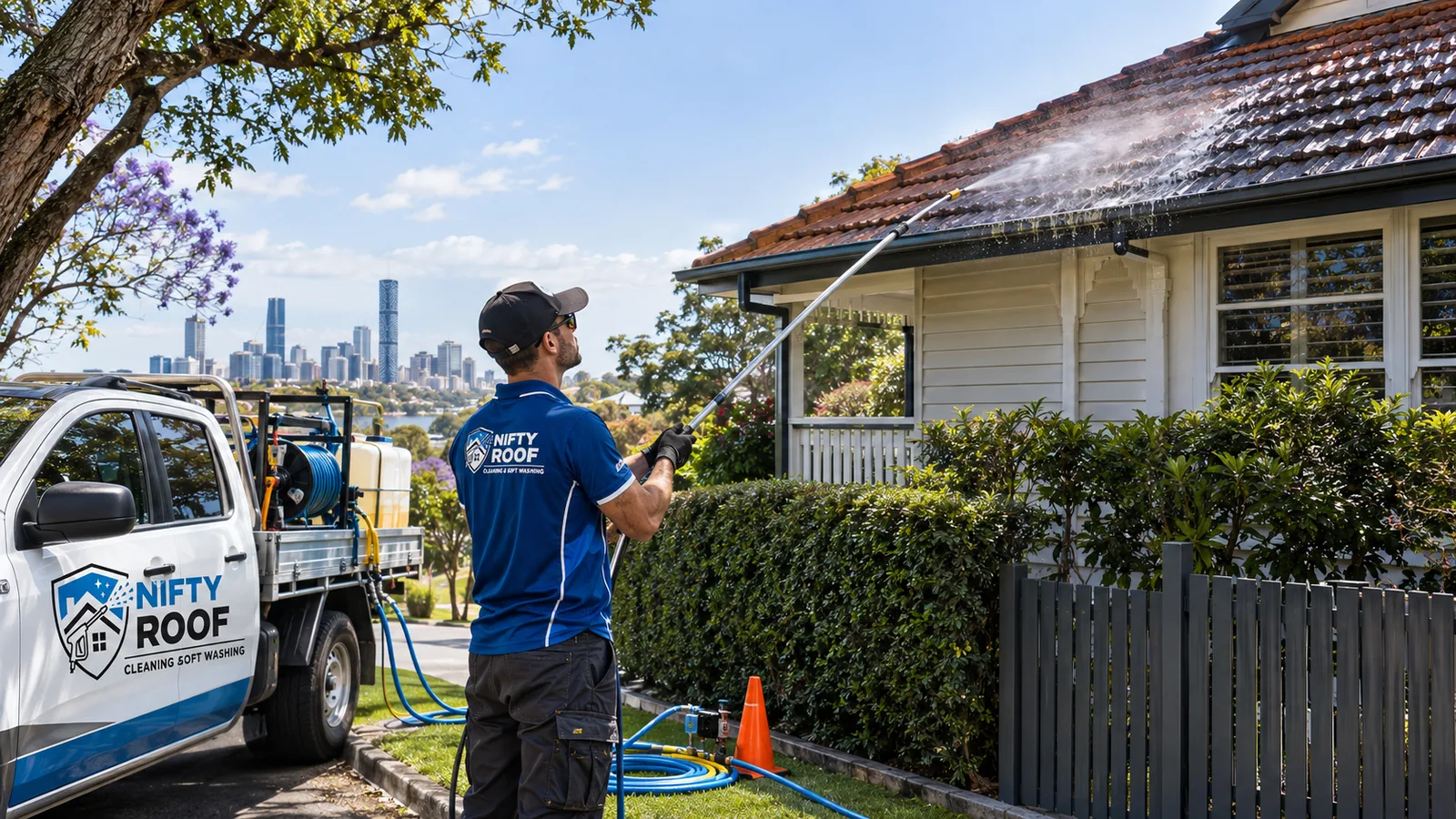
Roof washing Toowong properties calls for more than pointing a pressure cleaner at the tiles. Roof pitch, material, access, drainage and the type of growth all affect the method. Nifty Roof Cleaning Brisbane starts by checking the roof from 2 Benson St, Toowong QLD 4066 service operations, then sets a scope suited to the individual house.
We are miscellaneous specialists serving the Brisbane area who do this work with controlled chemical application, sensible dwell time and a rinse method selected for the surface. The aim is to loosen algae, mould, lichen and settled grime without relying on aggressive pressure. Before treatment, we identify vulnerable areas such as skylight seals, solar equipment, painted metal, loose bedding, gardens and rainwater collection points.
Toowong's mix of sloping streets, established trees and detached homes can make roof access and hose control important parts of the job. Brisbane's warm, humid conditions also support organic growth on shaded roof faces. A proper assessment accounts for those conditions rather than treating every elevation the same.
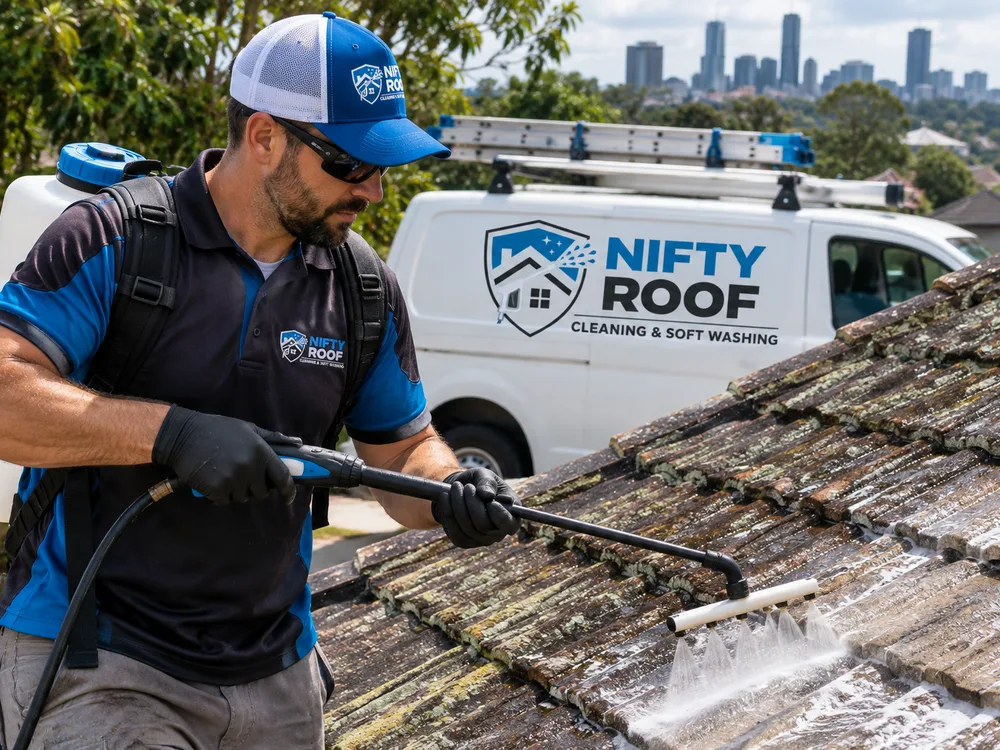
Soft washing Toowong roofs uses a cleaning solution to break down organic contamination, followed by a controlled rinse or weather-assisted release where appropriate. The chemistry does the cleaning work, so the process can use much lower water pressure than close-range blasting.
That distinction matters on concrete and terracotta tiles. Excess pressure can disturb fragile pointing, force water beneath laps or strip an aged surface coating. Metal roofs need their own approach because coating condition, fasteners, overlaps and runoff paths must be considered. Soft washing is still a technical process: concentration, contact time, temperature and rinsing all need control.
We assess visible defects before starting. Cleaning does not repair cracked tiles, failed flashing, loose ridge capping or active leaks. If a condition could allow water entry, it should be addressed before washing. This keeps the cleaning scope clear and helps the homeowner make an informed decision.
We review roof material, pitch, visible defects, safe access points and nearby property before equipment is set up.
The solution is selected and applied for algae, mould, lichen and other biological soiling, with dwell time adjusted to the condition.
Plants, painted finishes, solar components, skylights and water collection systems are identified so isolation, wetting or rinsing can be planned.
Rinsing is matched to the roof surface and contamination. Water is directed with care around laps, penetrations and drainage points.
Runoff paths and accessible work areas are checked after treatment, and equipment is removed without leaving hoses or residue around the property.
Where walls or hard surfaces also need attention, house washing Toowong work can be sequenced after the roof so roof runoff does not soil a freshly cleaned facade.
We identify the roof material, level of growth, access constraints and any visible maintenance concerns. The written scope should state what is being treated and what is excluded.
Hoses and equipment are positioned, nearby surfaces are protected, and runoff controls are planned. Rainwater tanks may need to be isolated from roof runoff during treatment.
The solution is laid on evenly at controlled pressure. Heavier lichen may need a longer treatment period and can continue to release after the initial clean.
The roof is rinsed where the method calls for it, accessible gutters and surrounding areas are checked, and any remaining marks or maintenance observations are discussed.
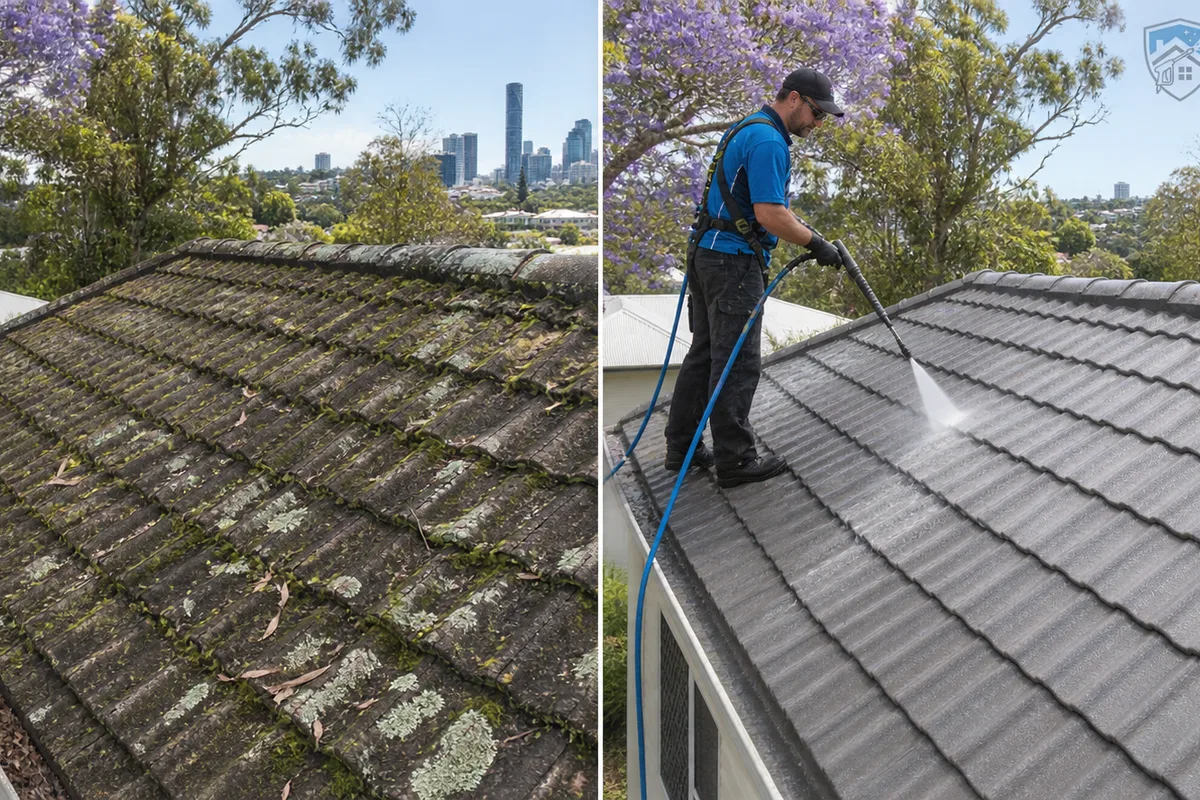
Cleaning order matters. Roof treatment can move loosened dirt and solution onto gutters, walls, paths and driveways. When several exterior areas are being refreshed, the roof is normally handled before lower surfaces. That reduces avoidable rework.
House washing uses low-pressure methods on painted walls, eaves, fascia and other compatible finishes, but its chemistry and application should still be matched to each material. Driveway cleaning Toowong properties usually calls for a different process because concrete, pavers and exposed aggregate can tolerate methods that would be unsuitable for roof tiles or cladding.
These related tasks remain separately scoped. Roof condition, wall area, driveway size, stains and access each affect labour and treatment. Coordinating them can produce a more consistent result, while a roof-only booking remains a practical choice when that is the immediate priority.
Roof washing in Toowong typically costs about $400 to $1,200 for a residential roof, while large, steep or heavily affected roofs may cost more. A small, straightforward single-level roof sits toward the lower end; complex access and extensive lichen treatment increase labour.
Final price depends on roof area, pitch, material, storeys, growth level, solar panels, water access and protection needed around gardens or rainwater systems. The exact cost is confirmed after the roof and access conditions are inspected.
A clear assessment can identify the right washing method, access requirements and property protection before equipment is set up.
Call for a Free EstimateSoft washing is generally suitable for sound concrete and terracotta tiles when the solution, pressure and rinse method are matched to the roof. Cracked tiles, loose pointing and failed flashing need attention first because cleaning cannot correct those defects. An inspection is particularly useful on older Toowong homes where previous repairs or coatings may affect the method.
A straightforward residential roof can often be treated within a working day, but access, pitch, roof size and growth level set the actual duration. Setup and protection take time on sloping Toowong blocks or properties with close boundaries. Heavy lichen may also continue to pale and release after the treatment visit rather than disappearing immediately.
A rainwater tank connected to roof runoff should usually be isolated during treatment and until the roof has had suitable rinsing or rainfall. The isolation period depends on the product and method used. Downpipes, diverters and tank connections should be identified before work starts so roof runoff does not enter stored household or garden water.
Solar panels should be identified and protected as part of the roof plan, and roof-cleaning chemicals should not be allowed to dry on the glass or frames. Panels also change safe access routes and hose placement. Roof washing is separate from electrical inspection or specialist panel maintenance, so damaged wiring or mounting concerns require an appropriate trade.
High pressure may remove the visible top of lichen quickly, but it can also damage aged tiles, coatings, pointing and weathered surfaces. A targeted treatment works on the biological growth and reduces reliance on force. Some firmly attached lichen may release gradually after treatment, which is preferable to scraping or blasting a vulnerable roof.
Yes, the work can be coordinated, with the roof normally treated before walls and hard surfaces. Roof runoff can mark areas lower on the property, so this order reduces repeat cleaning. Each area still needs its own assessment because painted walls, roof tiles, concrete and pavers require different pressures and treatment choices.
Describe the roof material, property access and visible growth, and Nifty Roof Cleaning Brisbane can prepare a clear scope for the work.